
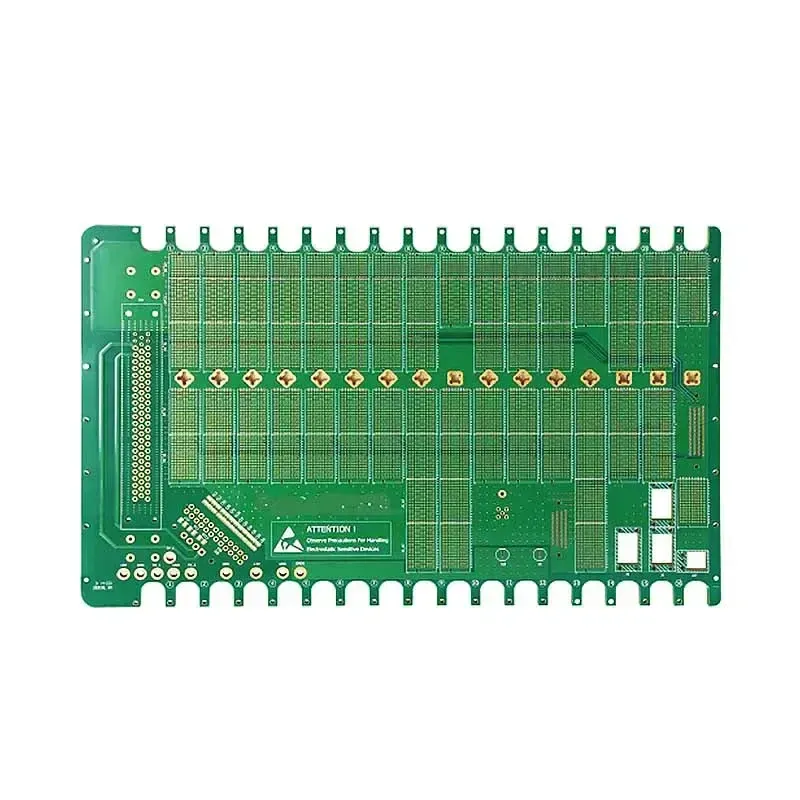
As data rates continue to increase, signal integrity (SI) simulation has become an essential part of high-speed PCB design. Early simulation helps identify potential issues before fabrication, reducing design iterations and improving reliability. Key considerations:

Signal Integrity Simulation: How to Reduce High-Frequency Crosstalk and Loss
As data rates continue to increase, signal integrity (SI) simulation has become an essential part of high-speed PCB design. Early simulation helps identify potential issues before fabrication, reducing design iterations and improving reliability.
Key considerations:
• Maintain continuous reference planes to provide stable return paths.
• Control trace impedance through proper stack-up, trace geometry, and dielectric selection.
• Increase spacing between critical signals and use differential pair routing where appropriate to reduce crosstalk.
• Select low-loss materials for high-frequency applications to minimize insertion loss.
• Validate designs with SI simulation and optimize before manufacturing.
Reliable high-speed PCBs are built by combining sound layout practices with simulation-driven design decisions.
Originally published on ShinePCB’s LinkedIn company page: 2026-07-15.
ShinePCB LinkedIn · 2026-07-15 ↗
← Engineering News