
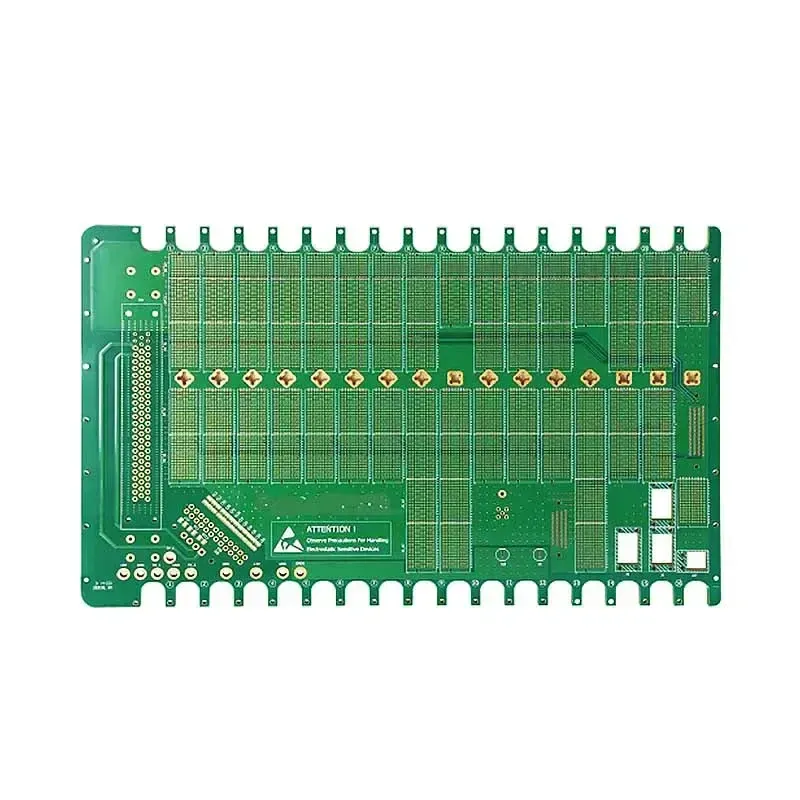
As AI servers become more powerful and data rates continue to increase, PCB design is facing new engineering challenges. It's no longer just about adding more layers. The focus is shifting toward signal integrity, power delivery, thermal performance, and manufacturing precision.

5G & AI Server PCBs: Higher Frequency. Higher Speed. Higher Density.
As AI servers become more powerful and data rates continue to increase, PCB design is facing new engineering challenges.
It's no longer just about adding more layers. The focus is shifting toward signal integrity, power delivery, thermal performance, and manufacturing precision.
Here are four trends shaping next-generation server PCBs:
🔹 Higher Frequency
Low-loss materials and controlled dielectric properties help reduce signal attenuation at high frequencies.
🔹 Higher Speed
As data rates move beyond 112G SerDes, tighter impedance control, optimized stack-ups, and shorter signal paths become increasingly important.
🔹 Higher Density
HDI, microvias, via-in-pad, and fine-line technologies enable more functionality within limited board space while maintaining routing efficiency.
🔹 Better Thermal Management
Higher computing power brings greater heat density. Copper balancing, thermal vias, and optimized PDN design are becoming essential for reliable operation.
As AI and 5G continue to evolve, PCB design is becoming a key contributor to overall system performance—not just an interconnection platform.
Which challenge do you think will define the next generation of AI server PCB design: signal integrity, thermal management, or manufacturing complexity?
Originally published on ShinePCB’s LinkedIn company page: 2026-07-20.
ShinePCB LinkedIn · 2026-07-20 ↗
← Engineering News