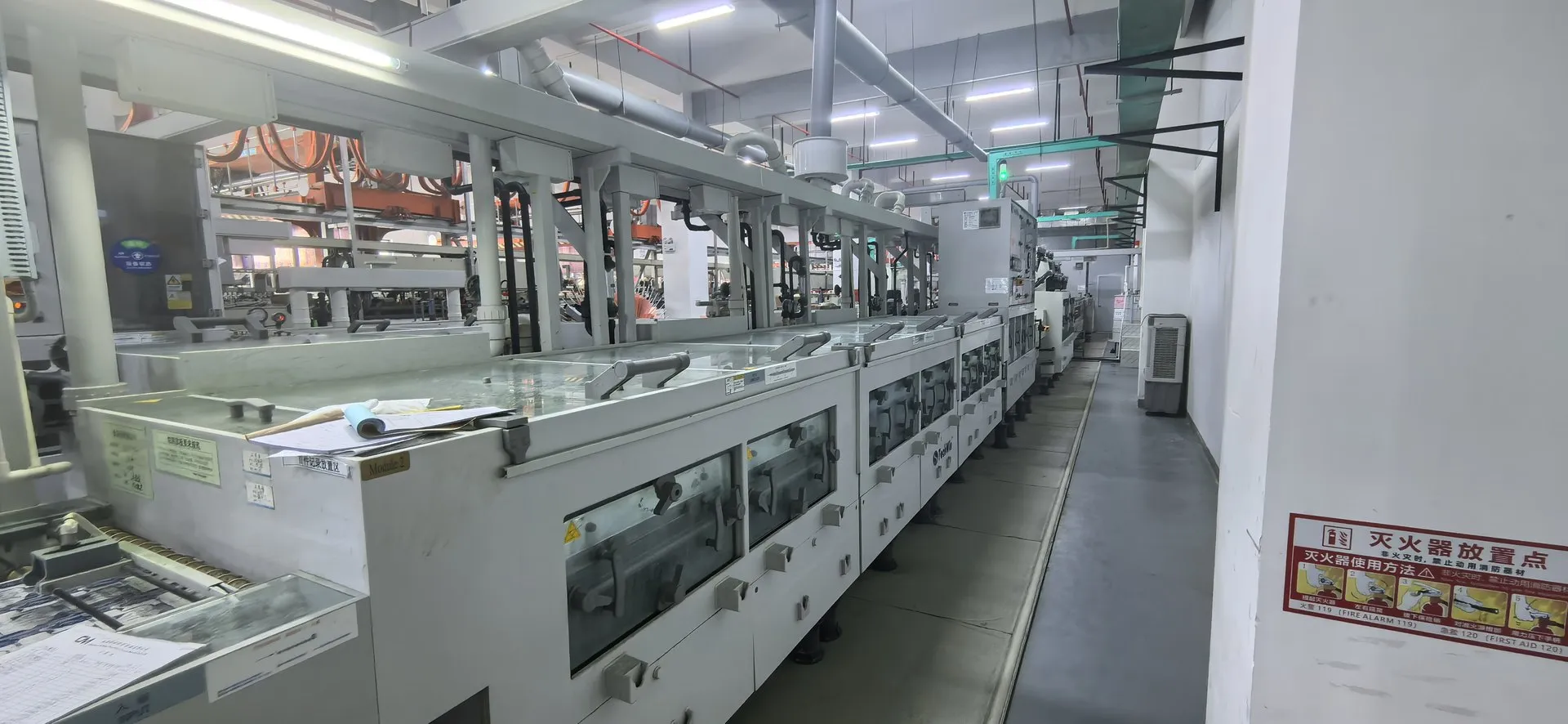

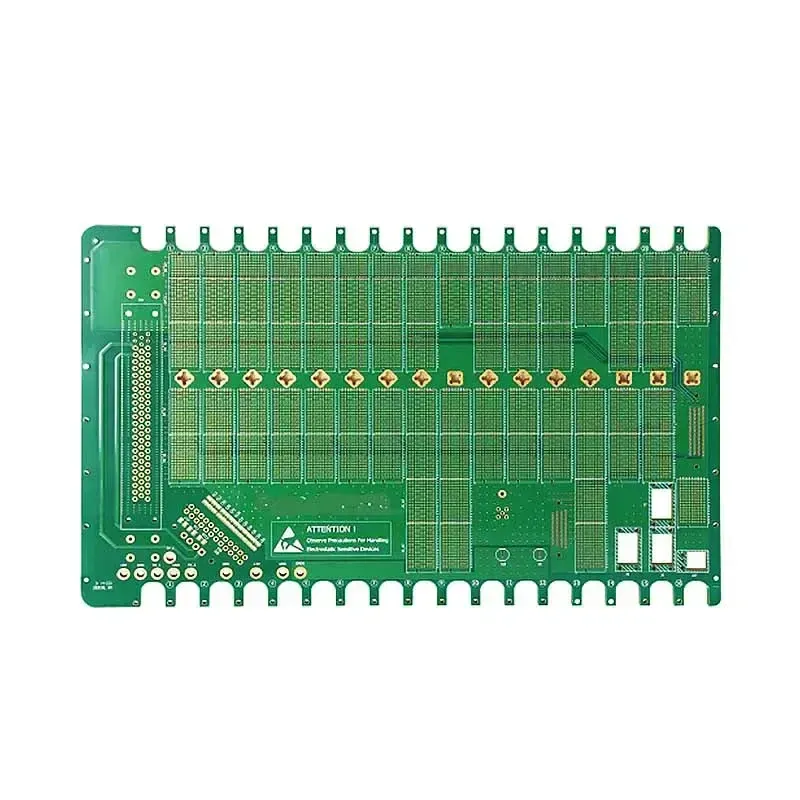
Stack-up symmetry, prepreg selection, resin flow, temperature and pressure must be coordinated to support reliable multilayer PCB manufacturing.

Multilayer PCB Lamination: Why Stack-Up Design Matters Beyond the Drawing
A multilayer PCB is more than a collection of copper layers.
Between those layers, prepreg materials, resin flow, temperature, and pressure all play important roles in determining the final board structure.
At ShinePCB, we recognize that reliable multilayer PCB manufacturing begins with understanding how materials behave during lamination.
Three key factors deserve attention:
1. Stack-Up Symmetry
A balanced stack-up helps reduce the risk of warpage during thermal processing.
Copper distribution, core thickness, and prepreg selection should be considered together rather than independently.
2. Prepreg Selection & Resin Flow
Common prepreg styles include 1080, 2116, and 7628.
Their construction and resin content influence dielectric thickness, resin flow, and bonding behavior during lamination.
For controlled-impedance designs, the final dielectric thickness is particularly important.
3. Temperature & Pressure Control
During vacuum lamination, heat and pressure allow the resin to flow, fill gaps, and cure.
The processing conditions must be matched to the laminate system.
High-frequency materials such as PTFE-based laminates may require different processing conditions from conventional FR-4.
Poor process control can contribute to voids, delamination, or dimensional instability.
A PCB stack-up is not just an electrical design document. It is also a manufacturing specification.
For engineers working on multilayer, high-speed, and RF PCBs, early coordination between design and manufacturing can help avoid costly revisions.
What is your biggest challenge when specifying multilayer PCB stack-ups: impedance control, material availability, or lamination reliability?
ShinePCB | PCB Manufacturing & PCBA Solutions
Originally published on ShinePCB’s LinkedIn company page: 2026-10-27.
ShinePCB LinkedIn · 2026-10-27 ↗
← Engineering News