

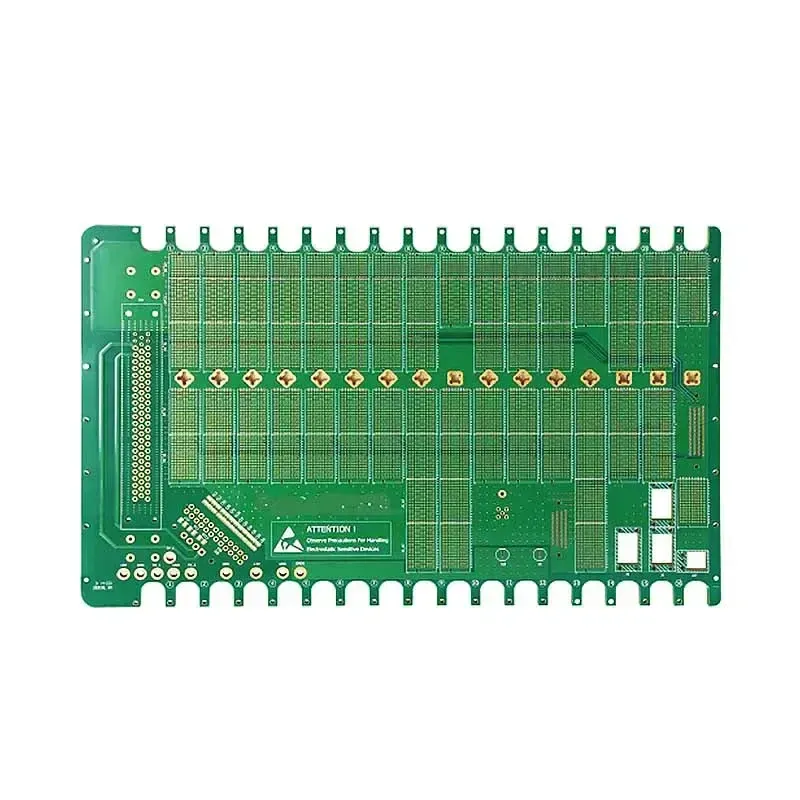
How residual via stubs, drilling depth accuracy and stack-up tolerances affect backdrilling and signal integrity in high-speed PCBs.

Backdrilling in High-Speed PCBs: Why Depth Control Matters
In high-speed PCB design, not every part of a plated through-hole contributes to signal transmission.
The unused portion of a via, known as a via stub, can introduce unwanted reflections and resonances, potentially degrading signal integrity at higher frequencies.
This is where controlled-depth backdrilling becomes important.
Backdrilling removes the unnecessary conductive portion of a via barrel while preserving the required electrical connection.
However, successful backdrilling involves more than simply drilling deeper.
Three manufacturing factors deserve particular attention:
1. Residual Stub Length
The remaining stub length affects the frequency at which unwanted resonances may occur. Shorter residual stubs generally help reduce these effects.
2. Drilling Depth Accuracy
Insufficient drilling depth leaves unnecessary copper behind, while excessive drilling can damage functional copper layers or connections.
3. Stack-Up and Registration Control
Layer thickness variation, drilling alignment, and lamination tolerances all influence the achievable backdrilling accuracy.
At ShinePCB, we support multilayer and high-speed PCB manufacturing, including backdrilling, HDI structures, and controlled-impedance designs.
For high-speed networking, communication infrastructure, and data transmission applications, manufacturing precision is an essential part of signal integrity.
A well-designed via is only as effective as the process used to manufacture it.
🌐 www.shinepcba.com
Originally published on ShinePCB’s LinkedIn company page: 2026-10-29.
ShinePCB LinkedIn · 2026-10-29 ↗
← Engineering News