

OpenAI and Work Louder have introduced Codex Micro, a compact physical controller designed for managing AI coding agents. Priced at $230, the device includes:

AI is moving beyond the screen—and into dedicated hardware.
OpenAI and Work Louder have introduced Codex Micro, a compact physical controller designed for managing AI coding agents.
Priced at $230, the device includes:
• Six illuminated keys displaying agent status
• Physical controls for switching between active agents
• A joystick for navigation
• A rotary dial for adjusting reasoning effort
• Customizable shortcuts for frequent Codex actions
• Push-to-talk and audio-prompt controls
This may look like a niche keyboard accessory, but the broader hardware signal is much more interesting.
As AI workflows become increasingly agent-based, users may need dedicated physical interfaces for:
• Monitoring multiple AI tasks
• Switching between agents
• Triggering automated workflows
• Providing voice or tactile commands
• Receiving immediate visual status feedback
For electronics manufacturers, this could create a growing category of small-volume, highly customized AI peripherals.
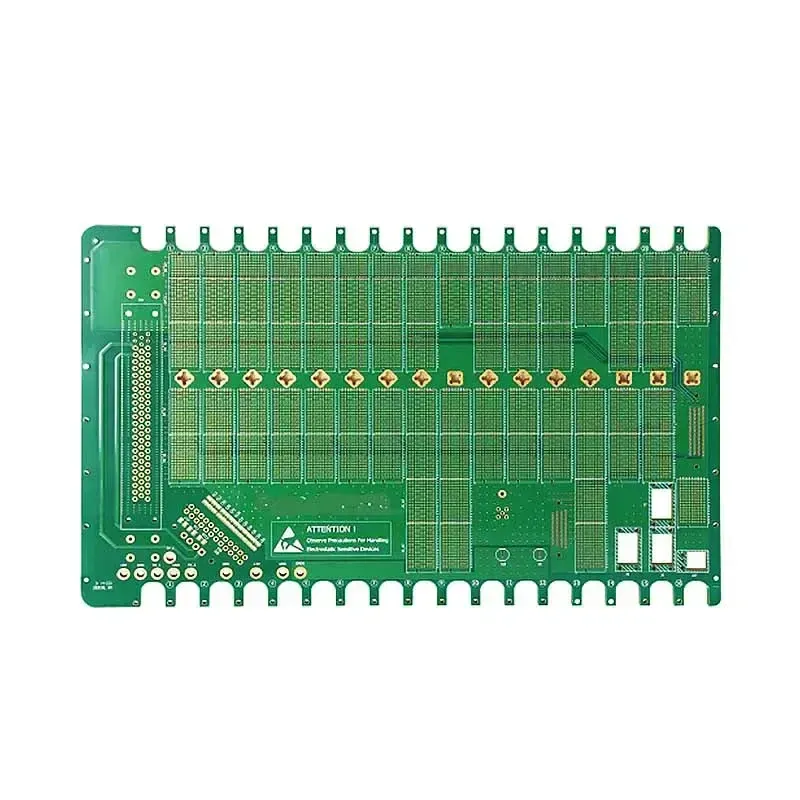
Behind products like these are engineering requirements that go well beyond a standard keyboard PCB:
• Compact multilayer PCB layouts
• USB-C, Bluetooth and HID integration
• RGB status-light control
• Mechanical switch and rotary-encoder interfaces
• Low-latency input processing
• EMI/EMC and power-integrity considerations
• Rapid prototype-to-production cycles
At ShinePCB, we see this as another sign that AI hardware will not be limited to servers, GPUs and data centers.
The next wave may also include smaller, specialized devices that make AI agents easier to control in everyday engineering and business workflows.
AI may run in the cloud—but the user experience is becoming increasingly physical.
What other dedicated AI control devices do you expect to see next?
Originally published on ShinePCB’s LinkedIn company page: 2026-08-03.
ShinePCB LinkedIn · 2026-08-03 ↗
← Industry News